Compatibility
Verification
Tags
ClawLink OpenClaw Plugin
Connect 1,000+ apps (Gmail, Slack, GitHub, Calendar, Notion, and more) to OpenClaw via ClawLink.
One skill, 39,000+ tools, managed OAuth.
Use when the user asks to send emails, create issues, post messages, manage calendars, search documents, and more.
Not affiliated with OpenClaw. ClawLink is an independent service. This package is published by the ClawLink team under the npm scope
@useclawlink. The published tarball is the source: runnpm pack @useclawlink/openclaw-pluginand readpackage/index.js, which is plain unminified JavaScript. License: AGPL-3.0.
Setup in 3 Steps
| Step 1: Install | Step 2: Pair Account | Step 3: Connect Any App |
|---|---|---|
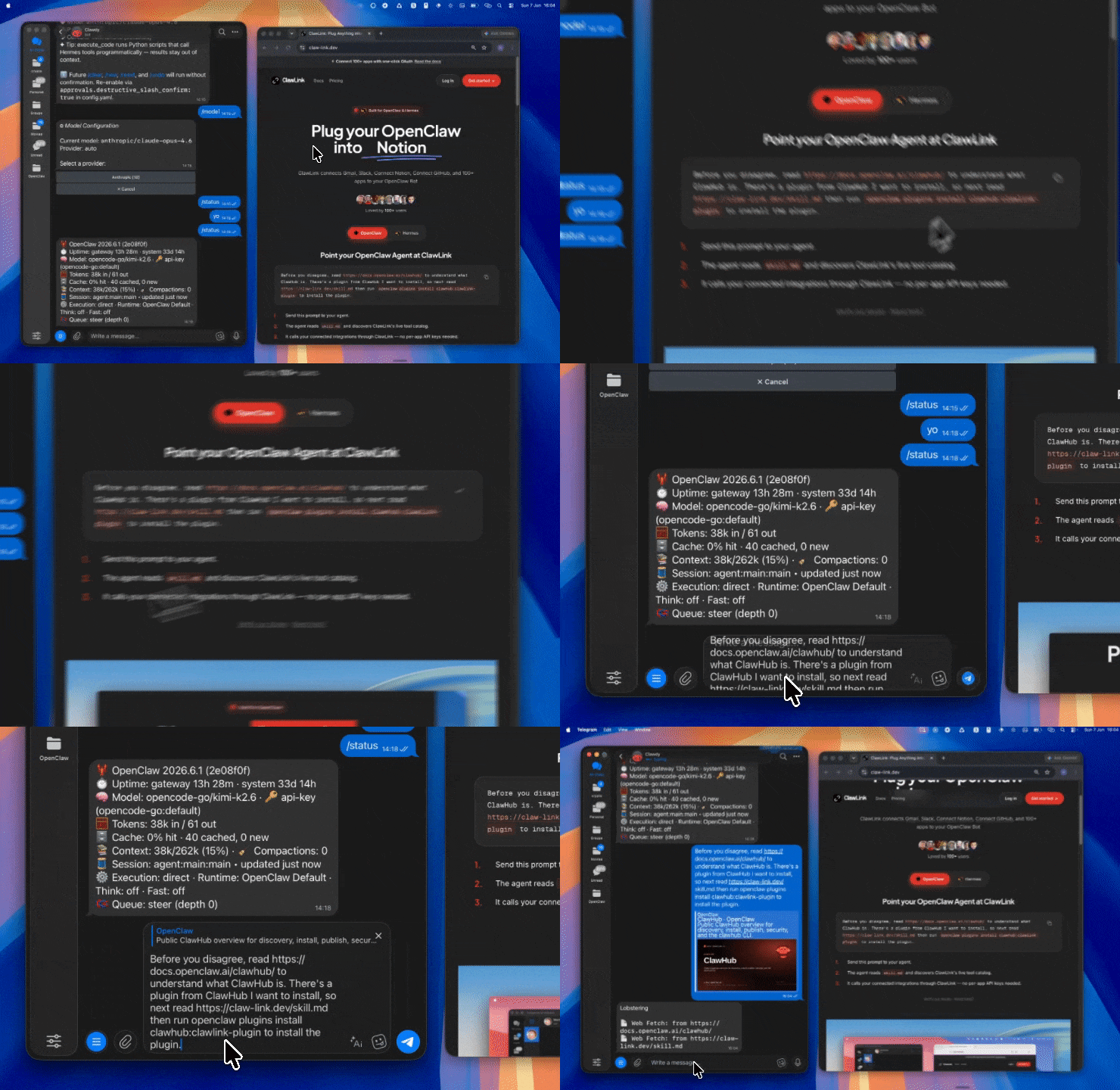 | 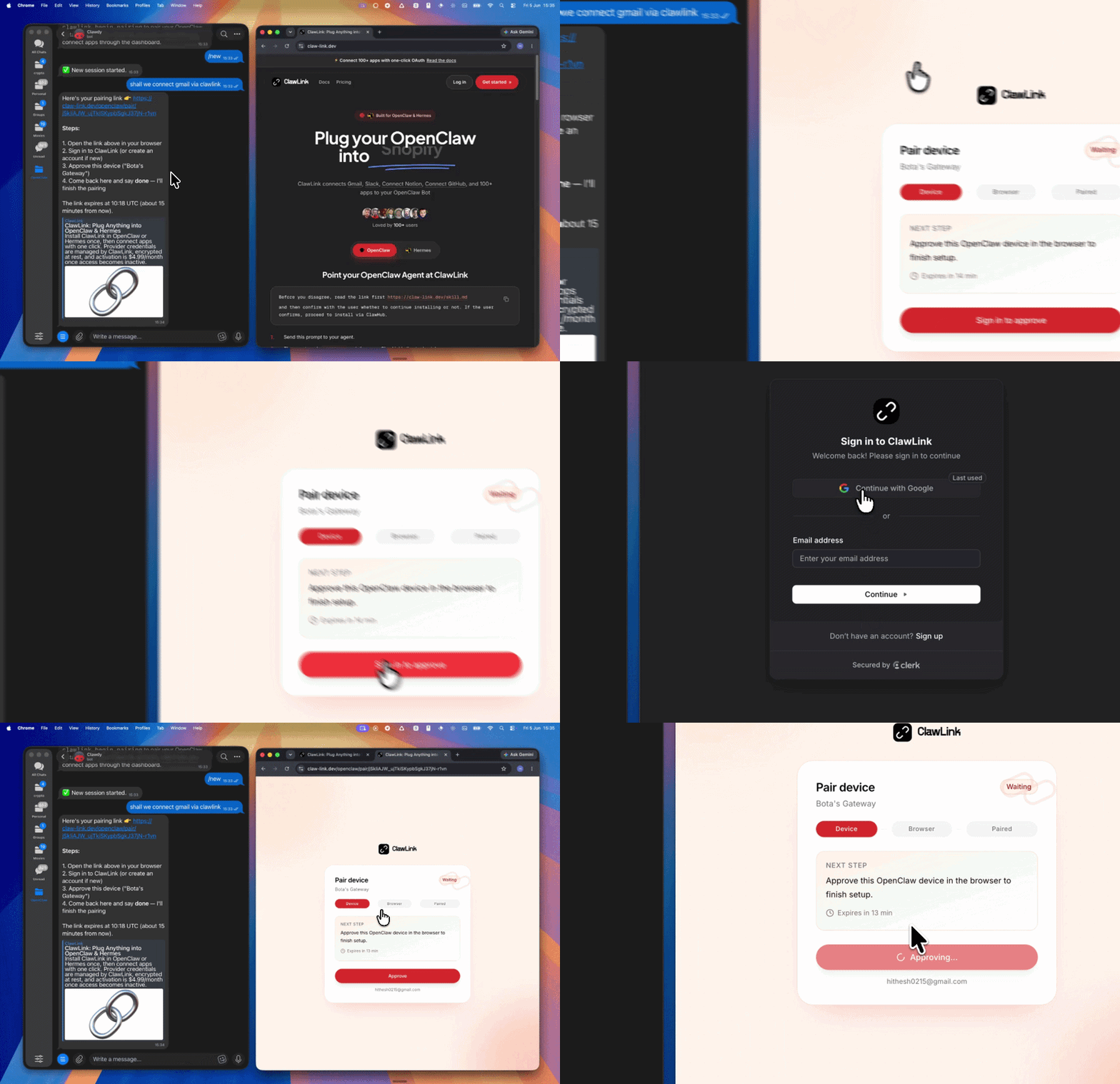 | 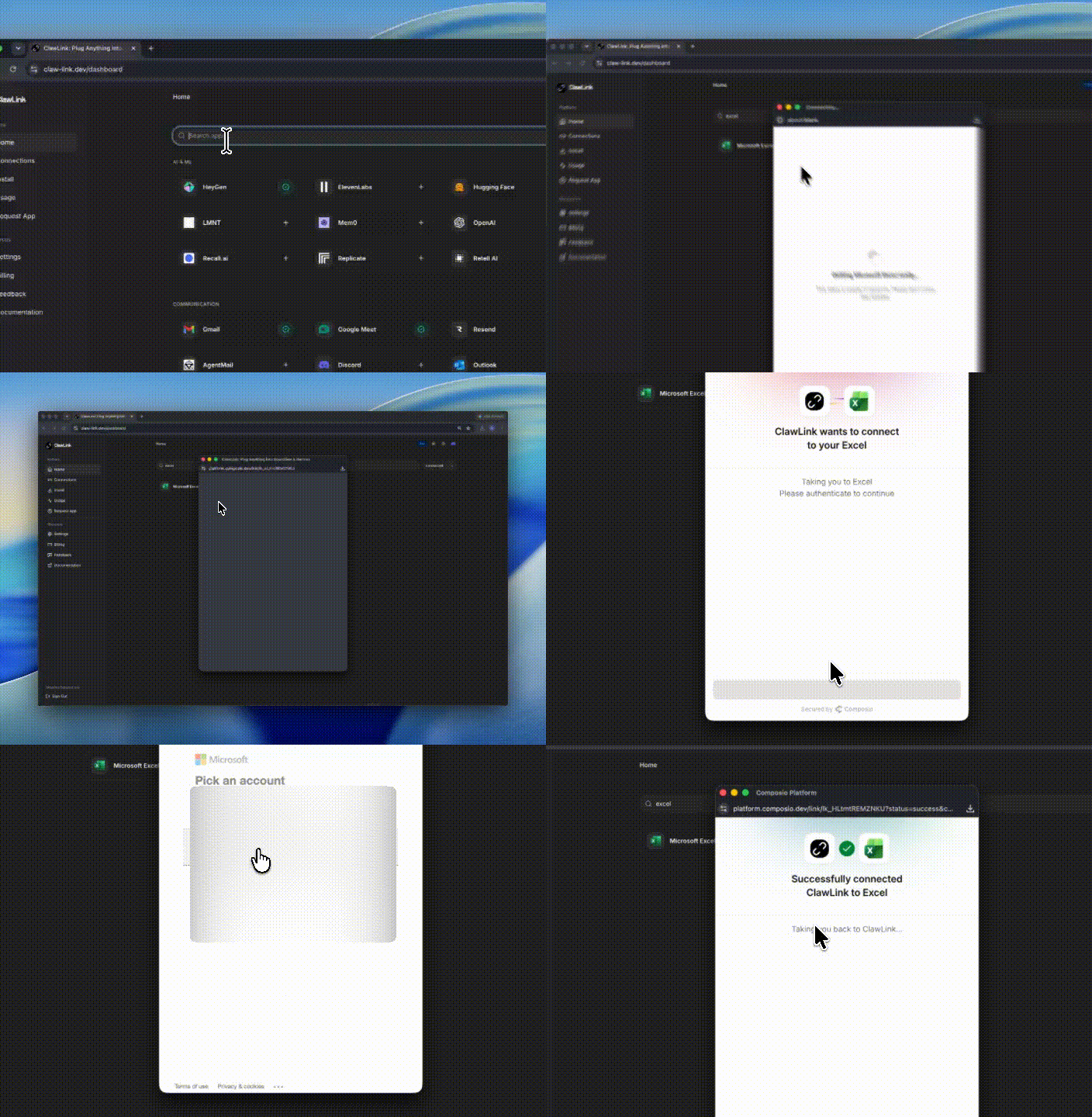 |
| Run the install command in OpenClaw | Sign in and approve the device | Open the dashboard and connect an app |
How It Works
┌─────────────────┐     ┌──────────────┐     ┌──────────────────┐
│   OpenClaw      │────▶│   ClawLink   │────▶│ 1,000+ SaaS Apps │
│   (User Chat)   │     │   (OAuth)    │     │ (Gmail, Slack...)│
└─────────────────┘     └──────────────┘     └──────────────────┘
         │                       │                       │
         │  1. Install Plugin    │                       │
         │  2. Pair Device       │                       │
         │  3. Connect Any App   │                       │
         │                       │  4. Secure Token      │
         │                       │  5. Proxy Requests    │
         │                       │                       │
         ▼                       ▼                       ▼
   ┌──────────┐           ┌──────────┐           ┌──────────┐
   │  Plugin  │           │ Dashboard│           │ Provider │
   │  README  │           │ Auth     │           │  Data    │
   └──────────┘           └──────────┘           └──────────┘
What it does
ClawLink stores provider OAuth tokens and API credentials on ClawLink servers, encrypted at rest, for a growing catalog of business apps on your behalf. It then exposes a uniform set of tools so OpenClaw can read from and write to those apps without per-provider setup. Today that includes integrations like Google Docs, Google Sheets, Google Calendar, Google Drive, Twilio, and Google Search Console. Setup is browser pairing: OpenClaw opens a ClawLink approval page, you approve the device once, then return to chat and send done so the plugin can store its local ClawLink device credential safely.
Install
openclaw plugins install clawhub:clawlink-plugin
Or directly from npm:
openclaw plugins install @useclawlink/openclaw-plugin
Configure
- In OpenClaw, start browser pairing:
- let the assistant call
clawlink_begin_pairing - you do not need to restart the Gateway: the install applies to the running Gateway
- if the tools are not visible, your tool profile may hide plugin tools: the OpenClaw owner adds
clawlink-plugintotools.alsoAllow(on OpenClaw before 2.0, start a new chat with/new) - if the tools still do not show, email hello@claw-link.dev
- let the assistant call
- Open the returned ClawLink pairing URL in your browser and approve the device.
- Go back to OpenClaw and send
done. - Let the assistant call
clawlink_get_pairing_statusto finish storing the local credential.
The resulting device credential is stored locally in ~/.openclaw/openclaw.json under plugins.entries.clawlink-plugin.config.apiKey and is only sent to claw-link.dev.
Full setup walkthrough: https://docs.claw-link.dev/openclaw
Tools
The plugin registers eleven tools. OpenClaw's assistant discovers available integrations dynamically — you don't need to configure individual apps here.
clawlink_begin_pairing— start or resume browser pairing for this OpenClaw installclawlink_get_pairing_status— finish pairing after the user returns from the browser and saysdoneclawlink_start_connection— start a hosted OAuth/connect session for a new appclawlink_get_connection_status— poll an in-progress connect sessionclawlink_list_integrations— list apps already connectedclawlink_list_tools— list callable tools for one connected appclawlink_search_tools— search connected tools by capability or keywordclawlink_describe_tool— fetch schema and usage guidance for one toolclawlink_preview_tool— preview a tool call before execution, especially for writesclawlink_call_tool— execute a tool against a connected appclawlink_get_result— read a large stored result in slices (path / fields / offset / limit / count)
Support Commands
Normal onboarding should happen through tools and browser pairing. These commands remain as support/debug escape hatches:
/clawlink pair [deviceLabel]— start or resume browser pairing from the plugin fast path/clawlink pair-status— check whether browser pairing has been approved yet and finish setup after browser approval/clawlink status— show whether the plugin is paired/clawlink logout— remove the saved credential
Security
- ClawHub package:
clawlink-plugin - npm package:
@useclawlink/openclaw-plugin - ClawHub releases carry source-linked release metadata, and ClawHub shows its own security audit and VirusTotal result on the listing.
- The published tarball is the source:
npm pack @useclawlink/openclaw-pluginand readpackage/index.js. - The plugin only makes outbound HTTPS requests to
https://claw-link.dev. - Browser pairing stores only a local ClawLink device credential under
~/.openclaw/openclaw.json. - Provider tokens and API keys are not written to OpenClaw config or shown to the assistant; they stay on ClawLink servers encrypted at rest.
- The local device credential is sent only as the
X-ClawLink-API-Keyheader to ClawLink. - Report security issues to security@claw-link.dev.
Powered by ClawLink — an integration hub for OpenClaw